Waiting for Summer

Waiting for Summer
Showing posts with label wildlife photography. Show all posts

Sunday, 15 February 2015

Part Four - Reading Photographs: Introduction: Notes - Photographs not used as a means of expression or communication

The introduction to Part Four describes how photography can be thought of as a language, with its own codes and symbols that allow the artist to convey a meaning and the viewer to interpret that meaning.  Language can enable people to share an understanding, or it can also divide them.  I imagine that as with a language, differences in understanding may mean that the intended meaning can be lost.  We discussed the concept of loss of authorial control earlier in the course in Part Two in the post on non-visible themes; I made the point that the understanding of the photograph is subjective and will depend on the experiences of the viewer.  This is a natural part of the process.  So, just as in a conversation, you may say one thing, it can be interpreted as another.  And with written languages, there are more constants; we are taught to read and write at school, we can refer to dictionaries when we need to look up a meaning.  Is it the same with photography?  Are there constants in meaning that will always mean the same to the artist and the viewer?  I imagine that the scope for difference in interpretation is greater with a visual language than a written/spoken language.

The introduction asks us to think about any photographs that are not used as a means of expression or communication.  This was tough!  I ran through a mental checklist of genres and purposes of photography to try to find an answer:
  • Advertising: clearly a language (saying "buy me") designed to penetrate your subconscious
  • Documentary/reportage: communication of stories
  • Fine art: used to communicate the artist's feelings on a subject
  • Wedding photography: good question...what is it communicating?  Like holiday and party photographs - is it just a record of an occasion or are the photographs actually saying something?
  • Wildlife photography: depends - some is used to highlight eco/conservation issues - but some, including the wildlife photographs I have taken - is just used to make cute pictures - these are however - still communicating how I felt about the animal?
  • Landscape photography: could be used for a variety of means - to communicate eco/conservation issues, to be used by the artist to express something, or could be used just to make pleasing pictures
  • Still life: could be used for fine art - could be meaningful or meaningless?
  • Journalism: communication of stories
  • Portraits: will communicate the subject and the artist's emotions
  • Street photography: communication of stories.
So of the genres, they could all be communicative, or not.  It depends on the purpose of the story.  On the basis though that all photographs are telling somebody something, even if just "look at me when I was on holiday", I'm not sure there are any that are not a means of expression or communication, but clearly the levels of complexity in meaning will differ.  I quick snapshot taken in a bar does not have the same meaning as something that is complex, shocking and designed to cause a reaction, such as war porn, or a fine art photograph rich in symbology that expresses the artist's emotions.

I may come back to these notes later on in this chapter - perhaps some photographs that are not used as a means of communication or expression will come to mind.

Monday, 2 February 2015

Wildlife Photographer of the Year 2014

Before Christmas, I went to the WPY 2014 exhibition hosted at the Natural History Museum in London.  I have been to this exhibition several years in a row now; it's become a bit of a "before Christmas" ritual.  And I am also an avid collector of the books, trying to complete the entire series with the help of my "Amazon wishlist"!  This year, however, a strange thing happened.  When I was walking around, I wasn't that impressed.  Usually I'm blown away with this exhibition, but for some reason, on this occasion I couldn't really respond to what I was seeing.  I certainly liked the winning image by Michael Nichols, which, along with another one of his images also in the exhibition, I had previous commented on in a post on my DPP blog, but I wasn't surprised by anything I saw.  At the time I wondered why my reaction was like that, especially when the display and lighting of this exhibition is so amazing and the camera settings are published so you can learn about the exposure and situation, but I thought it might be because I have now seen so much photography in exhibitions, and a lot of wildlife amongst that, that I could be becoming desensitised?  Is wildlife photography now predictable?

Nearly two months later, when I finally got around to writing this post, I checked back to the WPOTY site to see the winning images again.  And they are amazing!  Why didn't I think that at the time?  I still like the black and white lions by Michael Nichols, and a lot of the other images too.  The one I like the most though, shows a group of Ethiopian gelades: Communal Warmth by Simone Sbaraglia.  Primates have such appealing faces, and this is such a beautifully lit bundle of furriness - in this cold weather it would be tempting to join them!  And all of the finalists in the Birds category, are spectacular!  And then that image of the mouse, moon and mosquito, all the underwater shots, the Namibia dunes, and the various story collections; this is all remarkable photography!

So, I'm not sure why my reaction was what it was on the day; the only thing I can think of is that the exhibition is so crowded that it's very hard to walk around and enjoy it.  You can't take your time to look and enjoy an image when people are pushing and standing in front of you, and I think, impatiently, I just got fed up with being there.  This year, I will try and go when it's less busy.

Websites:

Own work referred to:

Sunday, 25 January 2015

Dana Popa: Not Natasha

As part of my feedback for Assignment Two, my tutor recommended I look at Dana Popa's "Not Natasha" series as an example of getting deeper into one subject.

My first reactions looking through the images were about shock, horror, how appalling that situation is (beyond appalling), but also how sensitive the images are.  Not Natasha is a series about sex trafficking in Eastern Europe and the impact it has on the victim's lives and their families.  More information about the series is available from lens culture.

Looking through the images you see evidence of how young the girls are, how unhappy they are, the damage they are suffering (scars from self-harming), how cheap their lives are, how they have been objectified, abused, tortured, how their families are ripped apart, their lives devastated by the kidnappings, some are even betrayed by their families (one girl was sold by her fiance) and to be frank, it's sickening.  Sickening that human beings can be so depraved and vile to other human beings.  In some images you see the victims, in others you see their environment, and evidence of their existence (traces) or their situations.  And although these images have been sympathetically shot, there is no doubt that Popa is engaged and on some level also feeling their pain, I find them chilling.  It is a horror story equal to that of conflict photography. 

In terms of photographer's engagement - it's clear that she had researched her subject, and spent a lot of time with the girls getting to know them and their story, traveling to do so.  She must have also taken many risks with her own safety to do so.  She spoke with seventeen different women to gain an insight into their lives and in doing so must have had been able to show a protective, sympathetic and supportive approach.  To get people to open up on a subject like this must be very challenging emotionally, for both subject and photographer.  I wonder if Popa needed emotional support herself to be able to produce a body of work that is subjective, but also stands up as a solid documentary.

One thing I noticed, which contradicts the advice I have been given about putting a series together is the format of the photographs.  I have been told repeatedly that a series should be visually consistent, which this is in tone/colour/subject/emotion - but not in format.  She has mixed horizontal/vertical rectangles with squares, some with a white border, some with no border, some with text, some without text.  What does this mean?  It's obviously deliberate.  Is it a commentary on complexity?

How does this relate to my work?  Why was this recommended to me?  The recommendation came as a result of my work for Assignment Two which was street/travel photography in theme.  My approach to street photography is not a documentary/reportage approach like this, but a spontaneous and impulsive exploration of random events looking for twists and irony in every day life.  I like to combine it with the travel element as this gives me a fresh and curious perspective; I notice more when I'm abroad than I do at home.  It's new, different and exciting, and to be honest, I get an adrenaline surge from doing it.  Even planning the trips gives me a rush.

So at the moment, I can only relate to this work coming from a position of both deep sympathy and appreciation of the amazing photographic skill and engagement.  I have thought a lot about where my photography is going over the past couple of years, and I'm happy with the direction it's heading at the moment.  I'm having a lot of fun with it, and for me, right now, that's what I want.  After a 50 hour working week, 15 hours of commuting, squeezing in friends, family and degree work (see Assignment Three for that context!) - all nice problems to have, but I do need to let off steam (not make more steam).  I realise that as this degree progresses, I may need to dig a lot deeper than I am at present, but I don't think I could take on something as committed and engaging as this right now.  BUT as time goes on, I'm sure I will, particularly once I have retired or maybe even once I've found something that I desperately want to document.  I can see myself in the future, once I have more time, making documentaries/reportage articles about animal conservation and protection issues.  That's why I'm dabbling in Wildlife Photography as well! 

I have also been thinking about documenting journeys along barriers, e.g. Israel/West Bank and making comparisons between people's lives.

Websites:

Friday, 23 January 2015

Practising Street Photography

I recently spent two weeks in Japan (over Christmas and New Year) which gave me a fantastic opportunity to practice my Street Photography - and what an amazing location to do so!  This was the first real opportunity I'd had since returning from my Varanasi trip on a Maciej Dakowicz Street Photography Workshop.  I didn't have an agenda for my Street Photography in Japan (apart from shooting Assignment Three if I could); I just took it as it happened - which is how I like to practice anyway.  And I think that subconsciously I was trying to practice the approaches I had learnt in Varanasi:

Exposing for highlights

Tokyo

Capturing a "moment"


Tokyo


Layering your subjects with no overlaps

Tokyo

Getting close to take portraits


Hiroshima

Finding humour

Tokyo

Putting the subject inside frames

Osaka

Creating a mystery

Hiroshima

Spotting an illusion

Osaka

Using backgrounds


Tokyo

Putting the focus point in the correct place (subject of story)

Jigokudani

Using colours effectively

Tokyo

And two additional approaches:

Echo

Tokyo
Abstract

Tokyo
The overriding observation is that the results of these outings are very similar in style to my photos from Varanasi, however this is not surprising given that this was the first chance I'd had to practice.  And I am really pleased with the results!  But they are of course also quite similar to the style of other people's who have just done their first workshop with Dakowicz.  In March I am going to Myanmar for my second workshop; aside from getting better at these basic styles, my objective for my next trip is to find a more original style plus also to improve my framing (still relying on cropping but don't tell Dakowicz!).

The full set can be found on my flickr site: https://www.flickr.com/photos/alisonadcock/sets/72157649453566929/

p.s. I also got some nice wildlife from Jigokudani on this trip!


Sunday, 23 November 2014

Part Two - Narrative: Reflections

Wow - my feet haven't touched the ground!  But instead of feeling tired, as I did at the end of Part One, I feel inspired, energised and ready for Part Three.  I did have a bit of a blip though during Part Two, maybe a part of the come down from my trip to India, but I went through a bit of block with my course work, as in not wanting to do it.  I kept asking myself why I'd chosen this academic route, when basically all I want to do is get out and take photos!  I've resolved that now (yesterday actually), the bigger picture is that one day, I'd like to make a living from photography, and that will include teaching, so I need the broader understanding and skill set and have to be careful not to lose sight of that.  I do however need to revise my timetable a bit, as I'm not getting out as much as I'd like, and at the end of the day, I need to practice to progress my personal ambitions.  I currently allow 2-3 weekends a month to complete my course work, and then I read/research/surf on my daily commute.  I think I need to try, as hard as it is, to "work after work", to put in one evening a week for course work.  That means also putting it on my office calendar to avoid staying late at work.  I will start doing this in the New Year, and this will free up a bit more time at weekends for practicing my street photography :)

So, during Part Two I have (in no particular order):
  • Taken part in a week-long Street Photography workshop in Varanasi, India with Maciej Dakowicz 
  • Learnt a lot about different ways of supplementing images with text and what that achieves
  • Learnt about loss of authorial control
  • Learnt about the difference between relay and anchor text
  • Understood how images can be ambiguous if not supported by text
  • Learnt about photographing the unseen
  • Met Dougie Wallace again at his Shoreditch Wildlife launch event
  • Reviewed 2 exhibitions
  • Read 0 photography books!!  (ooops.....)
  • Won a photography competition at work!  Yay!
  • Had one of my photographs used by Maciej Dakowicz on his website :o)
But, most importantly, a while ago, I wasn't sure where my photography was heading.  I was flitting between street, travel, wildlife, landscape, conceptual, art, documentary, trying out photojournalism....I had no idea where I was going.  Following my experience in Varanasi, I now known for certain exactly where I'm going.  I found this blend of street/travel photography very exciting and challenging - and this is what I want to do - every day that I can!

Finally, I need to do something about the tag list for this blog -it's getting a bit long....not quite sure what to do about it, but I'll give it some thought.

Friday, 31 October 2014

Thomson Reuters - Survival of the Greenest - Winning Photo

Thrilled to win first place in the Survival of the Greenest category in the Thomson Reuters 2014 World in Pictures competition (for Thomson Reuters employees) and also the Employee's Choice award.  My photograph will be exhibited on the Canary Wharf and Times Square Jumbotrons on Thursday 18th December!


And here is the view from that day in Canary Wharf and Times Square (via webcam):


Sunday, 24 August 2014

2020 Vision Exhibition - Grange-over-Sands

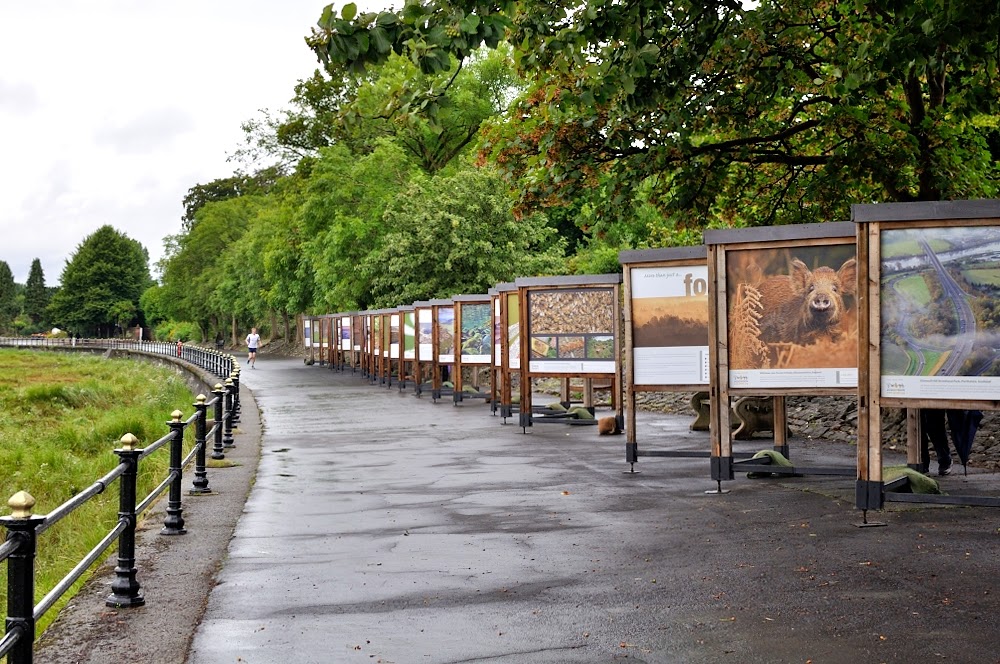
A couple of weeks ago, I stopped by the 2020 Vision Exhibition on The Promenade at Grange-over-Sands in Morecombe Bay.  I got to know about 2020Vision from a talk I went to in 2012 by Peter Cairns (see previous post during TAOP).


To quote their website: "2020VISION is the most ambitious nature photography project ever staged in the UK. It aims to engage and enthuse a massive audience by using innovative visual media to convey the value of restoring our most important but often fragmented natural habitats - to show that healthy ecosystems are not just for wildlife, but are something fundamental to us all" (2020 Vision 2014).

The exhibition itself was outdoors set up on the Promenade (with sandbags to boot due to the storms):


And this was a great setting as Morecombe Bay itself is one of the areas that the project supports:


so it was fantastic to see the exhibition in this marshland context:


I was really pleased to see images by some photographers that are familiar to me (my other passion being wildlife photography), including marine biologist and underwater photographer Alex Mustard, and Ross Hardinott and his beautiful damselfly:


My dogs weren't very happy about being dragged along to this, but I'm glad I went!  Wildlife photography with a purpose :) and it made me realise that I should try harder to find wildlife on my doorstep instead of waiting for travel opportunities!


Websites
  • 2020Vision (2014) [online] available from http://www.2020v.org/ [accessed 24 August 2014]
  • Hardinott, R. (2014) [online] available from http://www.rosshoddinott.co.uk/
  • Mustard, A. (2014) [online] available from http://www.amustard.com/
  • Northshots (2014) [online] About Peter Cairns available from http://www.northshots.com/about_peter_cairns.asp [accessed 24 August 2014] 

Sunday, 3 August 2014

Bleeding London Edges 174 and 110

As part of the Bleeding London project, I had the job of photographing the very edges of grids 110 and 174 in the London A-Z.  Here is a presentation I put together, illustrating that journey!  Am particularly pleased with my heron :-) and also the rabbit topiary!