Waiting for Summer

Waiting for Summer

Friday, 31 October 2014

Thomson Reuters - Survival of the Greenest - Winning Photo

Thrilled to win first place in the Survival of the Greenest category in the Thomson Reuters 2014 World in Pictures competition (for Thomson Reuters employees) and also the Employee's Choice award.  My photograph will be exhibited on the Canary Wharf and Times Square Jumbotrons on Thursday 18th December!


And here is the view from that day in Canary Wharf and Times Square (via webcam):


Dougie Wallace: Shoreditch Wild Life

Hot on the heels of Stags, Hens and Bunnies, Dougie Wallace has produced a new collection entitled Shoreditch Wild Life.  I was lucky enough to attend the launch party exhibition a couple of days ago and secure a signed copy of the book. 

And if you thought Stags, Hens and Bunnies was outrageous, this takes it to a whole new level.  An amazing collection of day and night scenes from Shoreditch showing as the title suggest a very wild side....from daytime garish colours and cheap glamour to night time seediness.  Stunning, "in your face", messy images, many slightly wonky (assume deliberate) - giving the feeling of chaos, rawness, putting the viewer directly in the moment.  The way the work is put together also is interesting; the pictures gradually get more and more outrageous - almost forming a narrative.  Towards the end of the book, there is a picture of people asleep in a pub - the party is now over.

Amazing.  I would love to put together a body of work like this.

One question though - why such a small book - these would have been much better presented in an A4 size format.  They are too good to be kept small.

Websites:
References:
  • Wallace, D. (2014) Stags, Hens and Bunnies. Stockport: Dewi Lewis Media
  • Wallace, D. (2014) Shoreditch Wild Life. UK: Hoxton Mini Press

Assignment Two - Photographing the unseen - Wonder

What does WONDER mean?
  • to be filled with amazement, admiration and awe?
  • to think or speculate?
  • to doubt?
I wonder.....


1


2


3


4

 
5


6


7


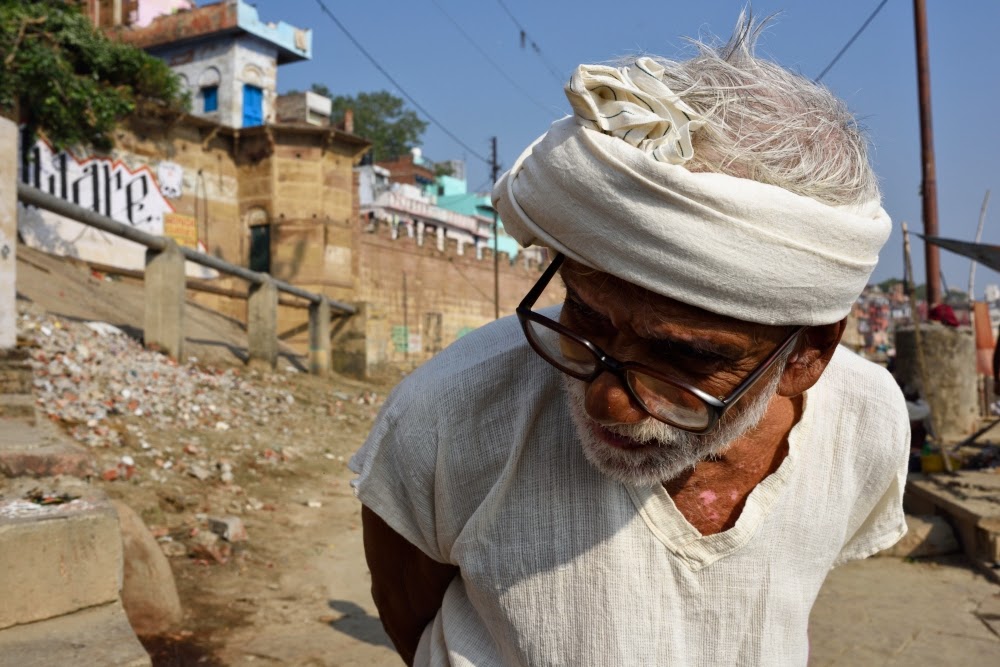
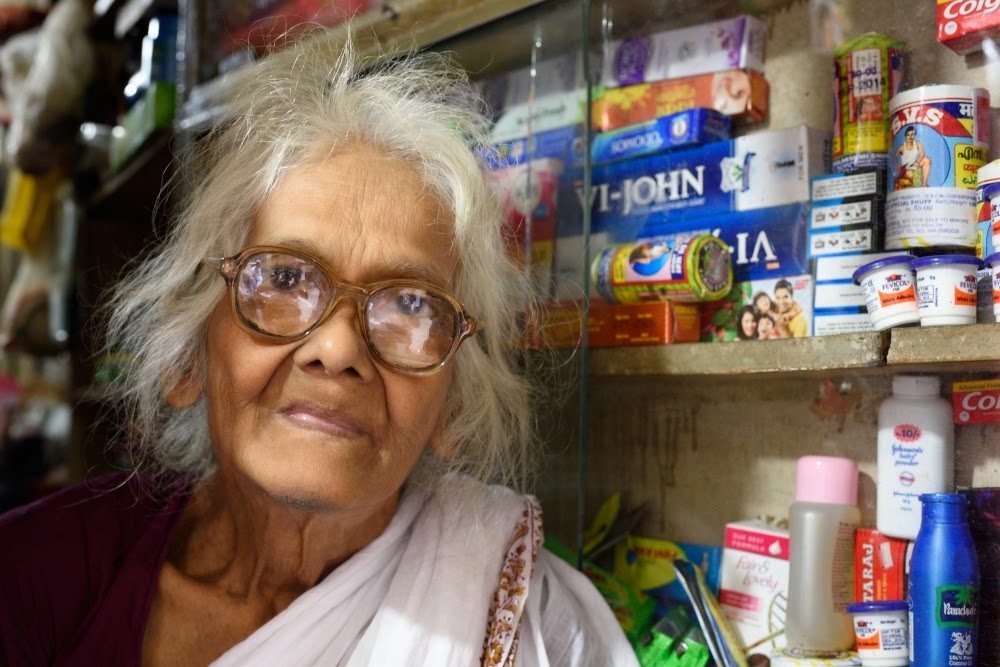
Maciej Dakowicz Street Photography Workshop in Varanasi, India

I just got back from a week-long street photography workshop with Maciej Dakowicz in Varanasi, India.  What an experience - in many respects!  Firstly my street photography progressed further than I could ever have expected or hoped for (to the point where I'm now thinking I need to delete all the old rubbish off my Flickr account!), and secondly I had an amazing travel experience to what must be one of the strangest places in the world and thirdly I've made some great new friends from Poland, Thailand and Austria, who I really hope to see and shoot with again.

So what was it like?  Well to start with, Dakowicz worked us incredibly hard.  All day, every day.   Even one day when I had a cold starting and felt really rubbish and had cried off for the morning, I got a text an hour later to tell me to get out, meet up with the others and shoot.  This continued momentum for the whole seven days meant that we made steady progress.  Every day we shot, edited, reviewed and learned from mistakes.   Dakowicz took turns to shoot with us, so we got to learn from his approach first hand, see him take shots and then look at the back of his camera and realise that a tiny tweak here and there, a single step forwards, backwards or sideways, or a tiny tilt to the camera can make a massive difference.

Some of the technical aspects that Dakowicz taught us I had been told before, but going through these aspects again, putting them into practice straight away, checking and correcting in the field, getting feedback the same day, and then trying again the next day, meant that they truly sank in.  I also think I understood more about the technical points as in really understanding how important it is to get them right and what a difference a tiny error can make to the whole picture.  And what a significant improvement a tiny correction can make to the whole picture.

I also realised that my preference for square format, might actually be due to laziness as it is easier to shoot squares than rectangles.......Dakowicz taught us (and insisted on) filling the frame and getting it right in shooting (no cropping)!  

So of all the learning points, here are those that resonated most with me (all shot with Nikon D810 and 35mm lens):

Exposing for highlights


Capturing a "moment"


Layering your subjects with no overlaps


Getting close to take portraits


Finding humour


Putting the subject inside frames


Creating a mystery


Spotting an illusion


Using backgrounds


Putting the focus point in the correct place (subject of story)


Using colours effectively


In addition, I also learnt practical things, like how to carry my camera and rucksack in a way that gave me freedom of movement with no neck ache and other annoyances (how did this take so long to work out?), and also how to approach and engage with people.

Finally, and this was very useful for my coursework, we learned how to construct a portfolio, how individual images need to work with each other, how to keep colours and tones consistent in a collection of photographs, and to use the same format (horizontal rectangles - not verticals or squares - within the same series. 

What would I change for next time?  Only practical things.  For a start, I wouldn't take my 24-70mm and 70mm-200mm lenses.  I didn't need them and they were heavy additions to my baggage.  I only needed my 35mm lens.  I would though take my Nikon D5000 plus 35mm lens as a back up.  I was worried the whole time about what would happen if my main camera failed (which it didn't) so I would prefer to have a back up camera next time.

Another practical issue - take cold relief and vitamin C.  I was prepared for all manner of illnesses and first aid situations, but not a cold, and this is and was the most likely thing to happen!

I already booked my next workshop for Myanmar in March 2015 and I can't wait. 

For more images, please see:  https://www.flickr.com/photos/124157193@N07/

And also Assignment Two!

Websites:

Friday, 17 October 2014

Trevor Crone

Trevor Crone is a friend of mine from Crossing Lines.  Photographically, we have a few common interests: seaside towns, urban spaces, interpretation of place, exploring memory, street photography and we both admire the work of Dave Mason.  So you'd wonder whether our approaches to photography would be similar?  Well actually, they couldn't be further apart.  Polemic, in fact.

Mine is generally chaotic, random, often hurried, garish, looking for chance events and I'm on my feet for ten hours in a single stretch and may take 1000 images and generally need instant gratification.  Even if I plan a piece of work, it still all happens at 100 mph, only to find when I get back that I mis-framed something, got stuck on the wrong ISO and so on.  The biggest challenge for me is learning to slow down and look more carefully. 

Crone's approach entirely the opposite.  He showed some images at a Crossing Lines meeting at the start of the month of a series that he is working on entitled "On Common Ground" in which he explores the memories of his childhood on the Kent coast and time spent with his father.  The result of this is a series of beautifully composed and exposed images which are very delicately balanced, peaceful and calm. I really like the sense of space in this scenes; they provide such a welcome relief and escape from the chaos and clutter of my own life!

Crone's approach is as follows (quote):

"The camera is an Ebony SLW810 (made in Japan) and takes sheet film up to 8" x 10". My film preference is Ilford's HP5 Plus. I usually develop 2 sheets at a time in a drum processor. Once dry they are contact printed, trimmed and simply mounted as you saw at Crossing Lines. Contacted printing (by tradition) is probably the simplest form of printing as the light sensitive paper is just exposed to light (usually just an ordinary light bulb) and processed in standard print developing chemicals used in most darkroom set ups."

This is the camera:


And here are some of the images:

Epple Bay (c) Trevor Crone

Minnis Bay (c) Trevor Crone

Palm Bay (c) Trevor Crone

I really hope he shows them publicly one day!

Websites:

Saturday, 11 October 2014

Part Two - Narrative: Project One - Telling a story: Exercise - Linear storylines

The exercise asks us to compare Briony Campbell's The Dad Project with Eugene Smith's Country Doctor article published in LIFE magazine, both examples of photo essays telling a linear story from an insider's point of view. 

I found these two articles very different from several aspects.  First of all, Country Doctor seemed to me to be very matter-of-fact, yes you get a sense of struggle from the images, but it didn't move me in the same way that The Dad Project, a very personal account, did, which had me reaching for the Kleenex way before I'd got to the end. 

The structure of the stories are also different.  The course materials describe Country Doctor as a linear photo essay, but is it?  The story presented is a chronicle shot over 23 days, but each photo represents a discrete event.  The events themselves are linked by the presence of the doctor and the subject matter, but this is not a sequential story.  Each photograph could be viewed individually, and the order that the images are presented in  could be changed.  It is not a beginning, middle and end narrative.  In addition, the text that accompanies the Country Doctor essay is not essential.  It's useful and interesting, but the photographs also speak for themselves; you can figure out what is going on without needing the text.  And the essay is essentially an account of the work of one individual and his relationship with a multitude of people that come and go in his life.  The photographs represent moments in his life (and the lives of his subjects), but there is no continuation of story.

In contrast, The Dad Project, is firstly a very linear account: it has an introduction, starting point, middle and end.  It is also an essay, illustrated by photographs, which support and increase the sense of emotion.  The essay, written in the first person, describes the relationship between two people, Campbell and her father, towards the end of her father's life.  It documents his illness, her way of dealing with it and coming to terms with the loss of her dad.  And in contrast to the Country Doctor, you could read the narrative without the photographs, and still get a deep insight into Campbell's emotions, but with the images somehow she really captures the emotions she feels.  She photographs the "unphotographable": love, pain, grief, upholding values, suffering, moments of optimism and death itself.

In terms of actual photography, the two bodies of work are obviously very different.  Country Doctor is captured in black and white with clear focus on elements e.g. angle of shooting, structure of composition, an attempt to make the doctor look heroic in the photographs.  Campbell's images are gentle and considered, colour, and truthful.

Campbell writes that the story is of an "ending without an ending": I think that by this she means three things:
  1. Reference to the concept of life after death
  2. The fact that when you lose someone close you never stop grieving, more that you learn to live with it and to give it space in your life, but it is a never ending process.  So I think she is referring to the first ending as the ending of her father's suffering, but that it has no ending because she will always love him and miss him
  3. Through her project, she has kept his memory alive and communicated it to a wide audience.  Thus the story continues.
References:

Sunday, 5 October 2014

Assignment Two - Preparation - Photographing the unseen

Sunday 5 October

The assignment asks us to reflect on what kinds of subjects might be seen as un-photographable and how we might go about portraying them using photography (around seven ideas), with the objective of developing one of those ideas into a visually consistent series of 7-10 images.  Here are my reflections:
  1. The five senses: sight, hearing, taste, touch, smell.  You could photograph somebody actively performing a sense, e.g. a person sniffing something or walking with headphones on, but you could not photograph the sensation of experiencing the sense.  For instance, you would not be able to photograph what something smells like - you can only photograph the thing itself and hope that the viewer can imagine the smell.
  2. Emotions: happiness, sadness.  You could photograph somebody's expression and hope that their face shows emotion, but can you really capture what they are feeling?  Can a photographer capture their own emotions?  In addition, the emotion conveyed also depends on the interpretation of the viewer.  For instance, I could capture a desolate landscape with mist and a lot of negative space, which one person might interpret as me feeling sad and isolated, but in actual fact, I would feel happy in such a scene, so it's relative.  The Dad Project by Briony Campbell is a very poignant example of a piece of work that has captured strong emotions in photography.
  3. Anticipation: how would you capture anticipation?  You would have to set a scene so that it was obvious what was about to happen next?  How would you show photographically what you are anticipating?
  4. Fear: you could capture fear by the expression in somebody's face, but can you really capture fear that you as a photographer are experiencing?  How would you show your own sense of dread, sickness, shakes?
  5. Dreams: dreams are a unique and subconscious experience - each person's dreams are individual, personal and not seen by other people.  They could however be reconstructed in photography as a narrative, but I don't think you'd be able to just go out and photograph a dream, you'd have to stage a scene and be creative, possibly even surreal.
  6. Needs: hunger, thirst.  Again, you could capture another person's hunger or thirst, but not your own.  You'd have to photograph things that conveyed the concepts of hunger and thirst.
  7. Wonder: how do you capture the wonder?  Is it seeing something amazing for the very first time?  Could it also be applied to something sinister?  Sure you can photograph the thing or the scene itself, but how do you capture the reaction of wonder.  Is it excitement (or even trepidation) in response to a situation?  Is it more ambiguous than that?  Is it a state of confusion?
For Assignment Two, I am going to attempt the 7th idea, which I hope to execute in Varanasi in India.  Having never been to India before, I really don't know what to expect.  Sure I've seen other people's photographs, but how do I capture the concept of wonder, in a way that the viewer understands that from the output?

This will be an unplanned exercise, as the images will need to reflect spontaneity to convey the excitement and discovery.  I will be participating in an intensive seven-day street photography workshop with Maciej Dakowicz, so there is also the element of excitement of working with a photography hero and learning new techniques.  I have no idea how this is going to turn out as a finished piece of work!  All I know is that it will be in colour :)

Sunday 23 November

Once I'd completed all the exercises and set about finalising my assignment submission, I wondered about the inclusion of text.  The Assignment instructions did not ask for text or captions, and my feedback from Assignment One was that I did not need the captions in that particular context.  BUT a lot of the work that we did for Part Two was about text and the relationship between text and image.  Would it be an error to omit text on that basis?  Did I want to guide the viewer into a reaction or did I want the photos to speak for themselves?

I searched other students' blogs for ideas, and came across Malcolm Burton.  He did use text to accompany his images for this assignment, but I felt that for my purposes it would give too much away and not leave enough ambiguity.

That decided, I realised that the images needed to speak for themselves and that I wanted amiguity.  Wonder by its very definition is ambiguous as it is not about certainty, so I therefore needed to preserve that concept.  The whole subject of wonder is interpretative and I did not to guide the reaction to individual photographs but more to take the reader on a journey - like peeling an onion - I wanted to strip off layers.  What I did do though was to include a brief introduction to set the scene by attempting a meaning of the word itself.  Fingers crossed.....

In terms of executing the assignment, it happened as I'd predicted: completely right-brained.  I did not plan these photographs, they were selected from my overall portfolio produced in Varanasi during the workshop I took part in.  I did have the subject matter in the back of my mind while I was there but I was not consciously shooting for this assignment.  I then selected the photographs afterwards using the usual star system in my software for editing.  The pictures I selected for this assignment are the best of those I considered illustrated the theme metaphorically and I also aimed for similar colours and tones (cool, apart from the orange in the first one chosen to punctuate the start of the journey and the wonder of every new day).  I put them together in a sequence of what you can image is the start of a positive experience of wonder, through to confusion, looking in to another scene from the outside (but not really being able to see what's going on), followed by a sense of alarm, and then on to something more sinister, ending with possible fear.

See here for my submission.

References:
Websites: